
Sustainability
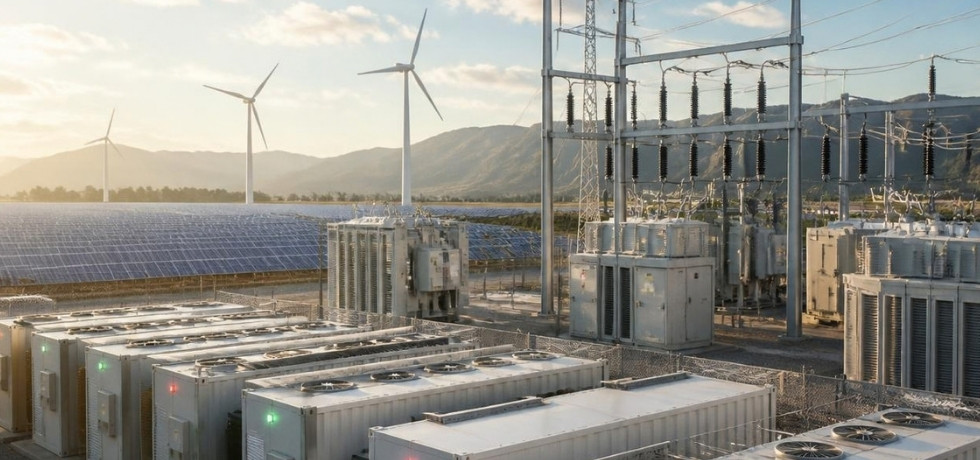
Image courtesy: Canva AI


Lithium-ion batteries built the modern battery economy. They power smartphones, electric vehicles, data centers, and increasingly, electricity grids. Their dominance is not disappearing anytime soon.
But the next chapter of green technology may not belong to one winning battery chemistry.
As renewable energy expands and electricity demand grows, storage must solve increasingly different problems. A battery designed to propel a vehicle for hundreds of miles does not necessarily need the same characteristics as one storing solar power overnight. The battery race is therefore shifting from finding the “best” chemistry to finding the right chemistry for each job.
Green Technology Is Entering the Age of Battery Specialization
The scale of battery storage growth explains why diversification matters.
The International Energy Agency (IEA) reports that 108 GW of new battery storage capacity was deployed globally in 2025, 40% more than in 2024. Installed capacity is now 11 times higher than in 2021.
Lithium-ion, particularly lithium iron phosphate (LFP), currently dominates this expansion. Yet dominance should not be confused with universal suitability.
The Grid Does Not Care About Driving Range
Electric vehicles reward compactness and high energy density. Electricity grids have different priorities.
Grid operators need storage that can absorb excess renewable electricity and release it when demand rises or generation falls. As renewable penetration increases, some applications also require longer storage durations.
The U.S. Department of Energy defines long-duration energy storage as systems capable of delivering electricity for 10 hours or more. That requirement opens the door to technologies designed around duration, longevity, safety, and cost rather than maximum energy density. This is where the battery race becomes more interesting.
Flow batteries can separate energy storage capacity from power output, making them attractive for certain long-duration applications. Iron-based systems are being developed for multi-day storage. Thermal, gravity, compressed-air, and other approaches push the conversation beyond batteries altogether.
The future of green technology could therefore resemble an energy-storage portfolio rather than a lithium-ion monoculture.
Sodium-Ion Is Challenging the Lithium Assumption
Among emerging alternatives, sodium-ion has attracted particular attention.
Sodium is widely available, and sodium-ion batteries can reduce dependence on lithium while potentially diversifying battery supply chains. They also perform particularly well in cold conditions.
Sodium-ion could find its strongest opportunities in stationary storage, shorter-range vehicles, industrial equipment, and colder climates. In other words, specialization may matter more than outright replacement.
The Real Battery Competition Is About Resilience
Battery innovation is often discussed as a race for better performance. Increasingly, it is also a race to build more resilient energy systems.
Battery supply chains depend on minerals, processing capacity, manufacturing infrastructure, and international trade. Concentration at any point can expose businesses and countries to price volatility or supply disruption.
As demand accelerates, diversifying chemistries could help distribute material requirements across a broader resource base. That makes chemistry diversification a strategic issue for green technology, not merely a scientific one.
There May Never Be One Battery Winner
For years, battery progress invited a simple question: What will replace lithium-ion? That may be the wrong question.
Lithium-ion can continue improving while sodium-ion expands into suitable markets, flow batteries address particular grid applications, iron-based systems target multi-day storage, and solid-state technologies pursue higher-performance use cases.
Competition can happen between technologies—and within an increasingly diverse storage ecosystem.
ALSO READ: Can Better Carbon Data Turn Eco Friendly Products into a Net Zero Emissions Advantage?
Green Technology Needs More Than One Chemistry
The battery storage race is not necessarily moving beyond lithium-ion because lithium-ion has failed. It is moving beyond lithium-ion because the energy transition is asking storage to perform too many different jobs for one chemistry to optimize them all.
The next breakthrough in green technology may therefore be less about discovering a universal battery and more about building an ecosystem in which different technologies solve different storage problems.
In the energy transition, the winning battery may not be a battery at all. The real winner could be optionality.
