
Sustainability
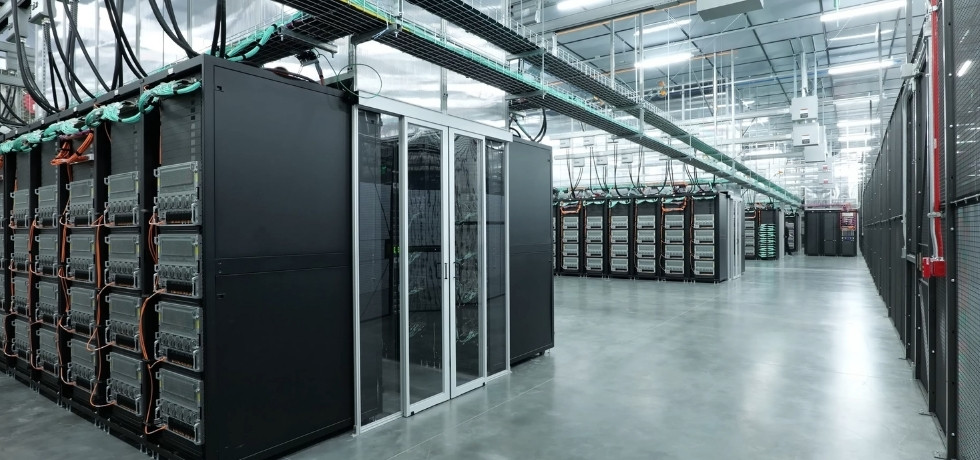
Image Courtesy: Shutterstock


AI may live in the cloud, but the infrastructure underneath it is intensely physical.
Every AI model trained, search performed, transaction processed, and application hosted creates computational work—and that work creates heat. As businesses demand more computing power, data centers need increasingly sophisticated ways to remove that heat without sending energy and resource consumption in the same direction.
This is turning cooling into an unexpected green technology battleground. What once looked like a facilities-management issue now influences data center capacity, operating costs, water use, location decisions, and sustainability strategies.
The race to build more computing power has created another race: keeping it cool.
Green Technology Is Moving Inside the Data Center
For years, conversations about sustainable data centers concentrated heavily on where electricity came from. Renewable power remains critical, but efficiency inside the facility matters too.
Cooling sits right at the center of that equation.
AI Is Changing the Physics of the Server Room
Traditional data centers often rely heavily on air cooling. Fans move cool air around servers while cooling systems remove the heat produced by computing equipment.
But AI workloads are pushing much greater computing density into individual racks. High-performance processors generate significant heat in increasingly concentrated spaces, making conventional cooling approaches harder to scale efficiently.
The question is no longer simply how to cool a building. Operators increasingly need to remove heat directly from extremely powerful computing equipment.
That shift is accelerating interest in alternatives such as direct-to-chip liquid cooling and immersion cooling.
Liquid Is Challenging Air
Liquid can transfer heat more efficiently than air, which makes liquid cooling particularly attractive for dense computing environments.
Direct-to-chip systems circulate coolant close to heat-generating components. Immersion systems take the concept further by placing computing hardware in specially designed dielectric fluids.
Neither approach represents a universal replacement for traditional cooling. Retrofitting existing facilities can be complicated, while new systems introduce different maintenance, design, and infrastructure requirements. But the direction matters.
As compute density rises, cooling architecture increasingly becomes part of IT architecture—not something designed after servers have already been selected.
The Water Question Complicates the Sustainability Story
Energy efficiency tells only part of the story. Some cooling approaches can rely heavily on water, creating a difficult sustainability trade-off in regions already experiencing water stress.
A facility might reduce electricity consumption while increasing pressure on local water resources. From an environmental perspective, calling that an uncomplicated win would miss the bigger picture.
This is why green technology strategies increasingly need to consider energy and water together.
Operators can explore closed-loop systems, alternative water sources, water-efficient cooling designs, and technologies that reduce dependence on evaporative cooling. The right solution will depend heavily on local climate and resource availability.
Geography Is Becoming Part of Cooling Design
Here is where the conversation gets more strategic: where a data center sits can influence how efficiently it operates.
Cooler climates can reduce cooling requirements. Access to renewable electricity can change operational emissions. Local water availability can determine whether certain cooling designs make sense.
Grid capacity, land availability, latency requirements, regulatory conditions, and proximity to customers still matter, of course.
But cooling efficiency adds another variable to site selection. Data center location is becoming an infrastructure optimization problem rather than simply a real-estate decision.
What If We Reused the Heat?
Cooling usually treats heat as something to eliminate. Green technology innovation raises a more interesting possibility: what if that heat became useful?
Data centers can potentially capture waste heat and redirect it toward district heating networks, nearby buildings, industrial processes, or other applications.
The practicality depends on temperature, infrastructure, location, and whether suitable heat users exist nearby. But the idea reframes the challenge.
Instead of asking only, “How efficiently can we remove heat?” operators can also ask, “Can somebody else use it?”
That turns waste into a potential energy resource.
Cooling Is Becoming a Boardroom Issue
Why should executives care about what happens around server racks?
Because cooling increasingly affects the economics of digital growth.
More efficient systems can potentially improve infrastructure density, reduce operating pressure, support sustainability targets, and allow organizations to deploy greater computing capacity within physical and power constraints.
For cloud providers, colocation companies, enterprises, and AI infrastructure developers, cooling choices can therefore influence both cost and competitive capacity.
The companies that solve cooling more effectively may be able to scale computing more effectively too.
ALSO READ: The Core Green Technology Investments Driving Utility Resilience
To Conclude
The next generation of computing infrastructure will require more than faster chips and larger facilities.
It will need better ways to manage the heat those systems create.
That makes cooling one of the less glamorous—but increasingly consequential—areas of green technology innovation. Liquid systems, water-conscious design, smarter site selection, heat reuse, and integrated energy management can all contribute to a more efficient data center model.
The digital economy may look weightless from a screen. Behind that screen, however, its future could depend on something surprisingly physical: how intelligently we handle the heat.
