
Sustainability
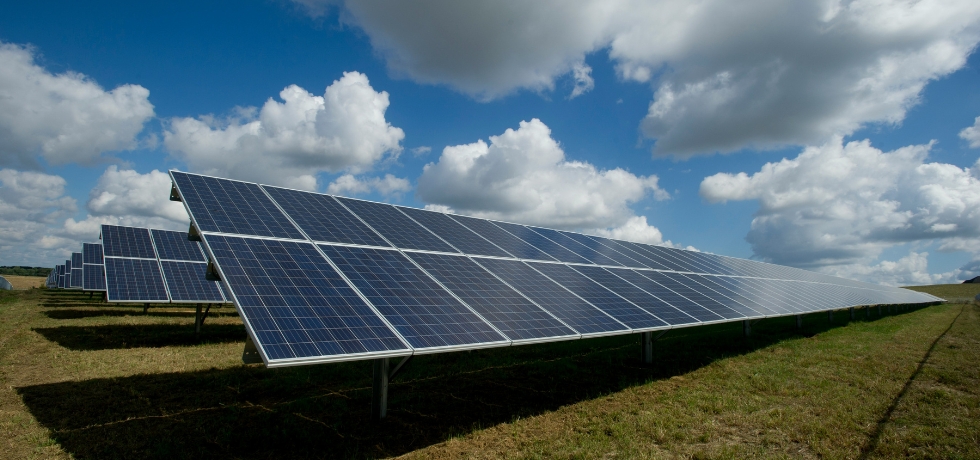
Image Courtesy: Unsplash


Global data centers pulled 565 terawatt hours of electricity in 2026, a jump of over a quarter from the year before, according to Gartner’s June 2026 forecast, with AI-optimized servers alone responsible for nearly a third of that draw. Utilities and hyperscalers are now racing toward the same four green technology fixes: small modular reactors, green hydrogen, on-site microgrids paired with storage, and waste heat reuse. Each solves a different piece of the same constraint, matching power that never sleeps to sources built for a slower grid.
Also read: The Next Sustainability Race: How Green Technology Is Transforming Industrial Competitiveness
Will Green Technology Outpace AI’s Power Demand in Time?
Power availability, rather than chip supply, has become the ceiling on AI growth. Interconnection queues run five to seven years in many regions, and roughly seventy percent of U.S. grid infrastructure is approaching the end of its working life. Hyperscalers are building around utilities rather than waiting on them, which is why each fix below skips a different part of that bottleneck entirely.
Small Reactors Are Becoming AI’s Power Backbone
Small modular reactors produce up to 300 megawatts from a footprint near fifty acres, running continuously rather than following weather patterns the way solar and wind do. That dispatchable, round-the-clock output matches AI’s demand curve almost exactly, and hyperscalers have noticed. Two moves define the shift underway:
- Amazon backed a five hundred million dollar round for X-energy’s gas-cooled reactor design
- Idaho National Laboratory approved the first fully integrated nuclear AI data campus
Momentum here is less about experimentation and more about securing supply years ahead of need.
Hydrogen Steps In Where Batteries Fall Short
Batteries handle hours of buffering well, but AI facilities sometimes need power reserves that last weeks. Green hydrogen, produced through electrolysis using surplus renewable electricity, can be stored far longer and converted back through fuel cells on demand. For sites with cheap renewable access and room to store it, hydrogen becomes the long-duration layer batteries were never designed to cover.
Skipping the Grid Queue With On-Site Microgrids
Waiting years for a utility interconnection rarely fits AI’s build timeline, so operators are pairing on-site solar and wind with battery storage to run largely independent of the public grid. These microgrids shorten deployment from years to months and give operators direct control over reliability and carbon output, without depending on aging transmission lines to catch up.
Turning Wasted Heat Into a Second Asset
Every AI rack sheds heat as a byproduct, and that heat is increasingly treated as a resource rather than waste. Facilities are piping it into district heating networks, greenhouses, and adjacent industrial processes, turning an efficiency problem into a secondary revenue stream and another green technology layer that cuts the cooling load a site would otherwise have to offset elsewhere.
Frequently Asked Questions
Will Renewable Energy Alone Solve AI’s Power Problem?
Renewable capacity is expanding roughly twenty two percent a year through 2030, covering close to half the growth in data center demand on its own. The remaining gap is why dispatchable sources like small modular reactors and hydrogen storage stay essential alongside solar and wind.
How Soon Can These Fixes Scale to Match AI Demand?
Linglong One reached commercial operation this year, but most small modular reactor projects still target the end of the decade. Hydrogen and microgrid deployments move faster at smaller scale, meaning near-term demand relies on a blended portfolio rather than a single dominant fix.
